H1 2025 Credit: How Optionality Faced Off Against Volatility

It’s hard to reflect on the biggest trends that impacted global credit markets this year so far, without thinking of April and the global tariff-driven volatility. Following ’Liberation Day’, the CBOE Volatility Index (VIX) spiked to over 60, its highest level since the COVID-19 pandemic. Euro-denominated credit default swaps (CDS) volumes surged 113% year-over-year (YoY), and notional volumes moved almost in lockstep with widening index spreads, expressing sentiment as market conditions shifted.
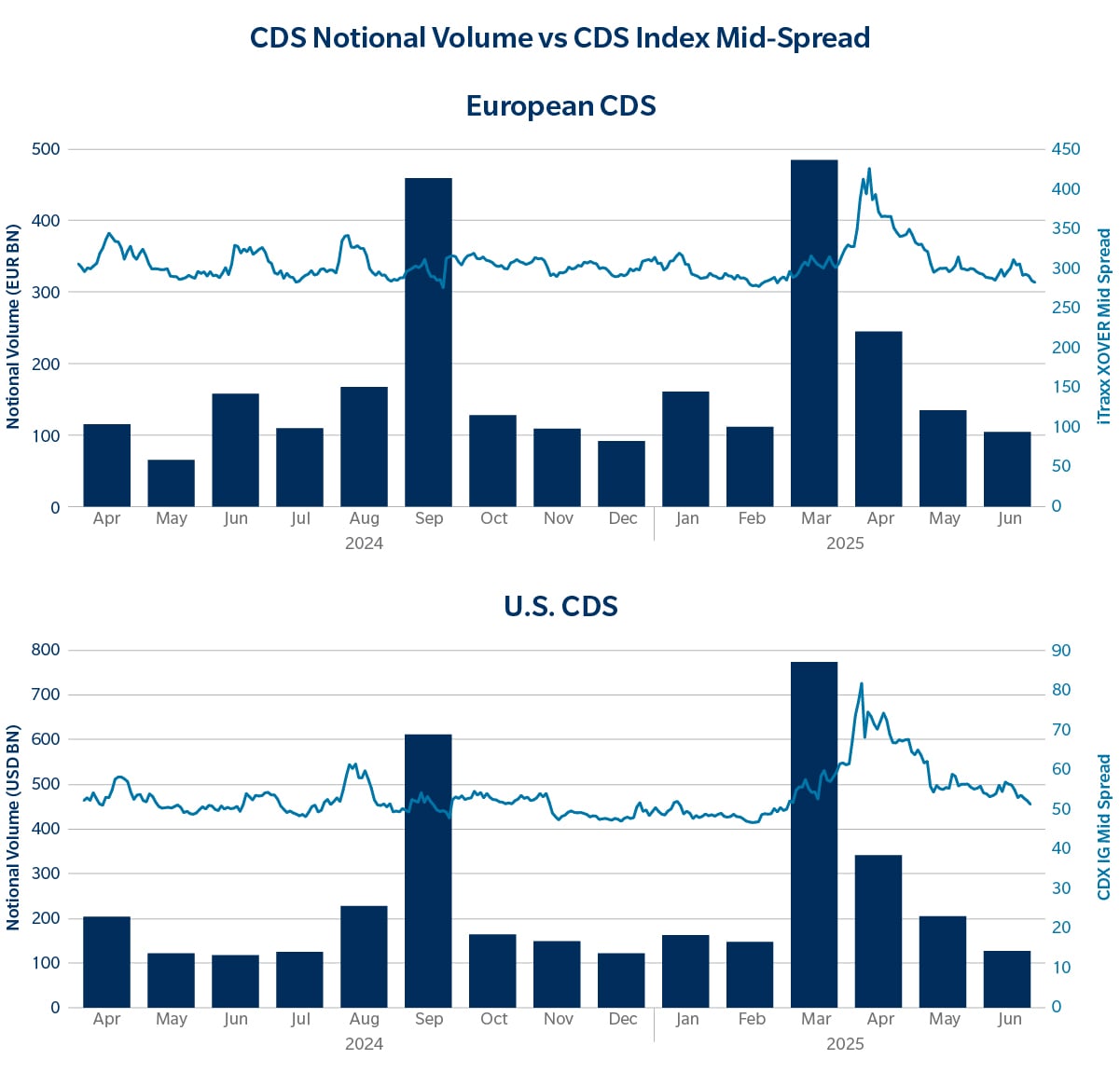
While that sudden market shock dominated headlines and resulted in several very long trading days, it wasn’t the defining moment for credit markets. More notable was how credit participants swiftly absorbed the tariff news, as well as the 12-day Israel/Iran conflict shortly after, and continued to navigate the uncertainty with confidence, while tailoring their strategy to context and tools to purpose in real-time.
Multiple Roads to Credit Market Liquidity
Even during the height of the April volatility surge, trading activity on Tradeweb’s European credit platform held steady. Single-name trades via our Request-for-Quote (RFQ) protocol rose 20% YoY during the month, and portfolio trading (PT) volumes rose 78% over the same period. European credit RFQ and PT volumes have continued to show steady growth in H1 2025, +18% and +10% YoY, respectively. Across European and U.S credit, PT volumes climbed 30% YoY in H1 2025.
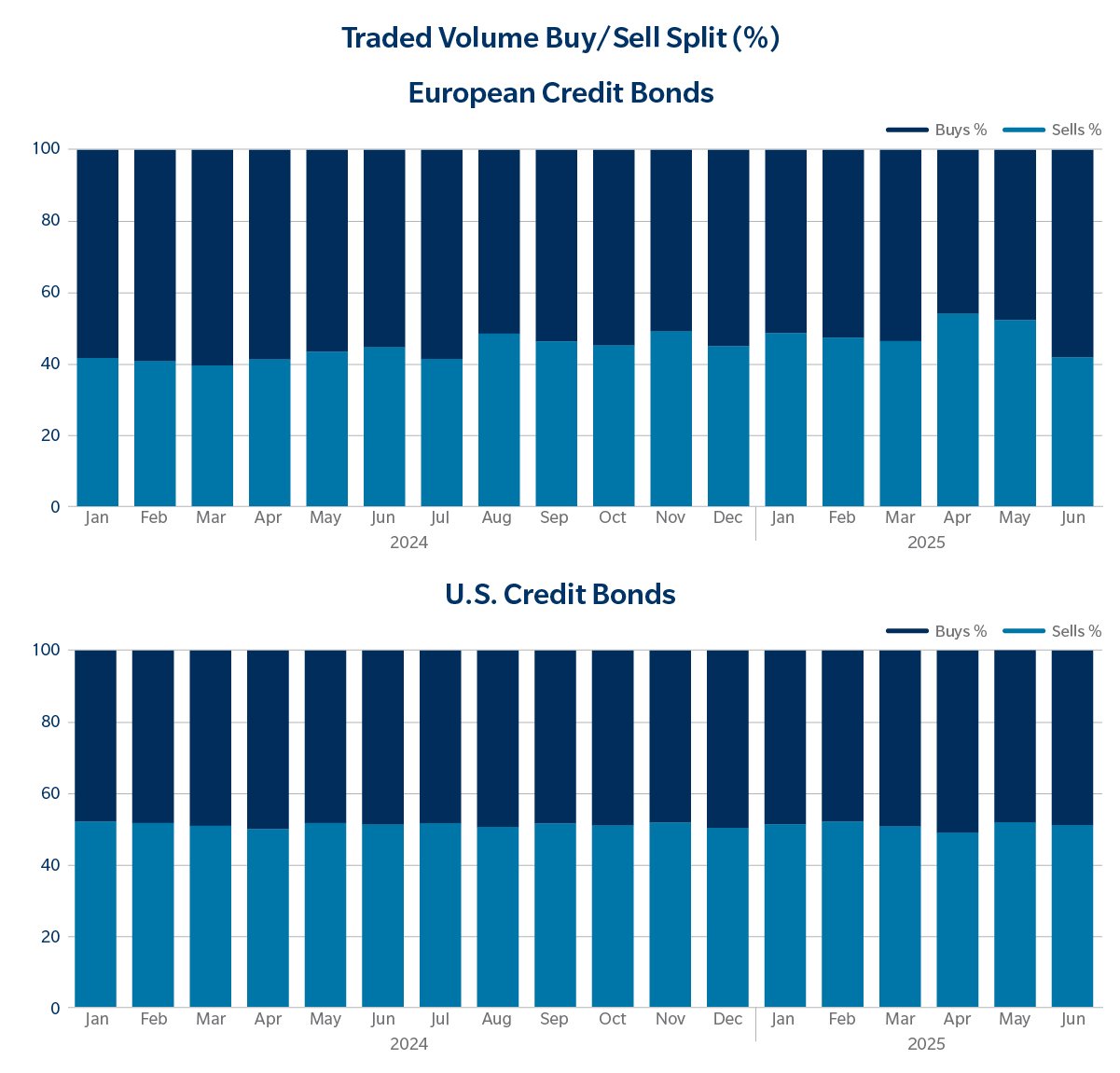
Both trading protocols have shown strong resilience and execution certainty, with cost trends adding further insight. The charts below track how transaction costs and trading behaviour shifted globally, reflecting how investors weigh price discovery against execution efficiency. While RFQ and PT costs remain distinct yet connected, a spike in RFQ costs from March to May signalled episodic market shifts. Buy/sell splits showed consistent directional flow across European and U.S. markets, and costs for both protocols normalized by May. Together, these metrics reinforce the value of using a diverse mix of trading protocols with complementary strengths.
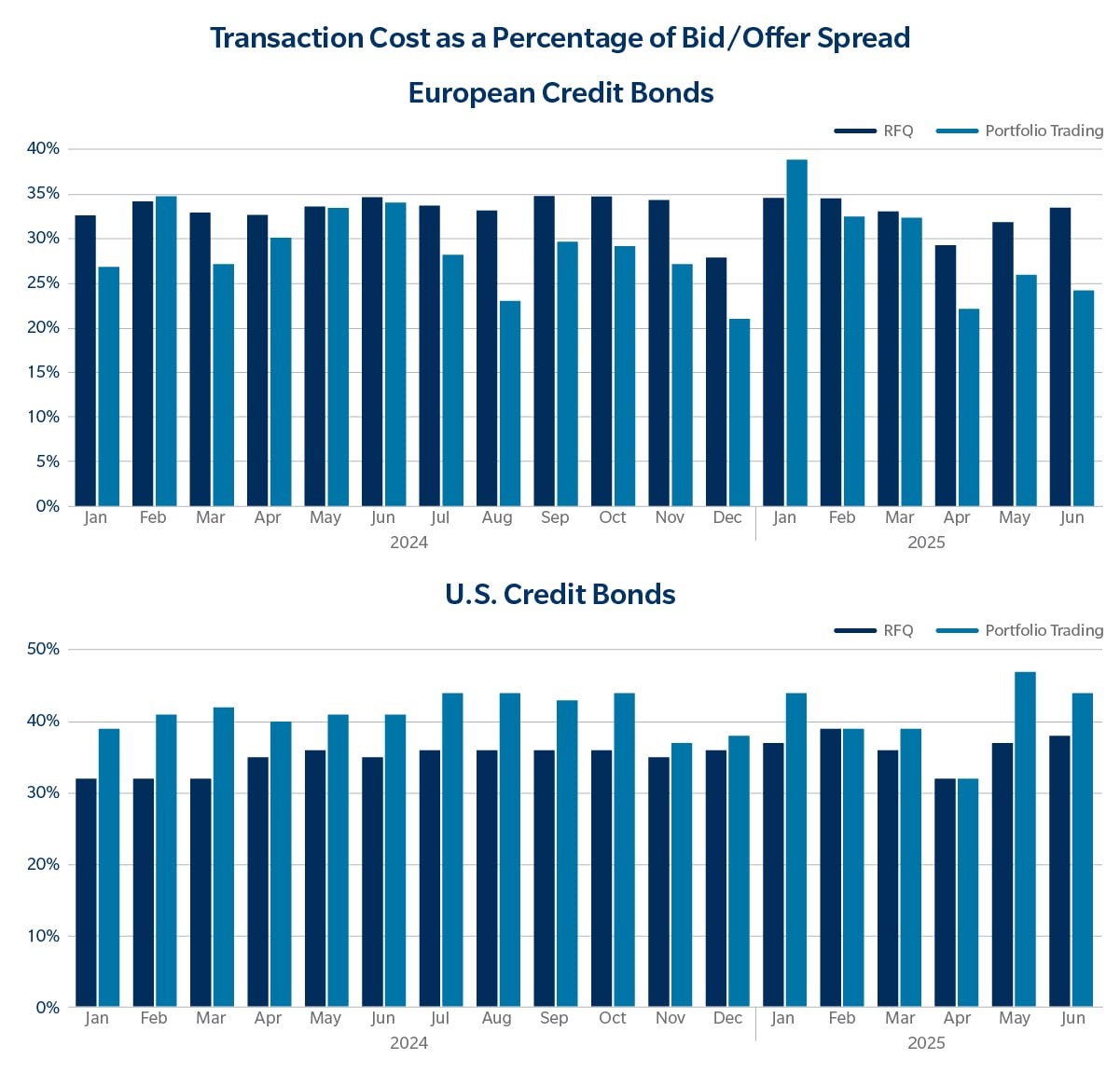
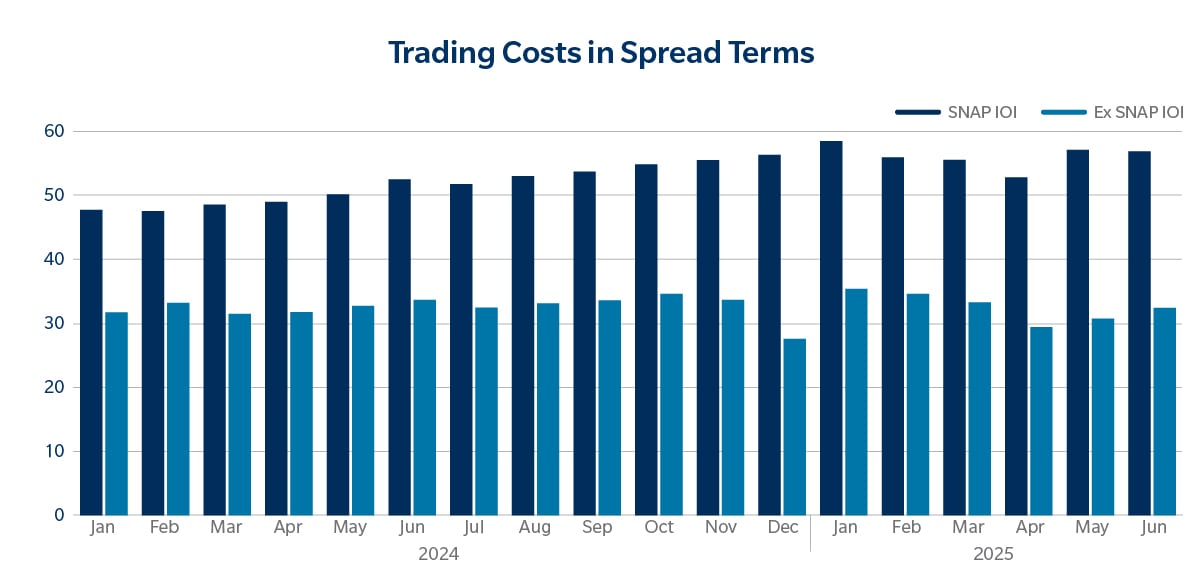
Despite the volatility, clients experienced stable transaction costs, with users of our SNAP IOI smart dealer selection tool - designed to surface actionable, residual liquidity from Tradeweb’s Sweep sessions - able to connect with the most relevant dealers across both institutional and wholesale markets and execute at a lower cost.
Diverse Strategy, Record Impact: Credit ETFs in Focus
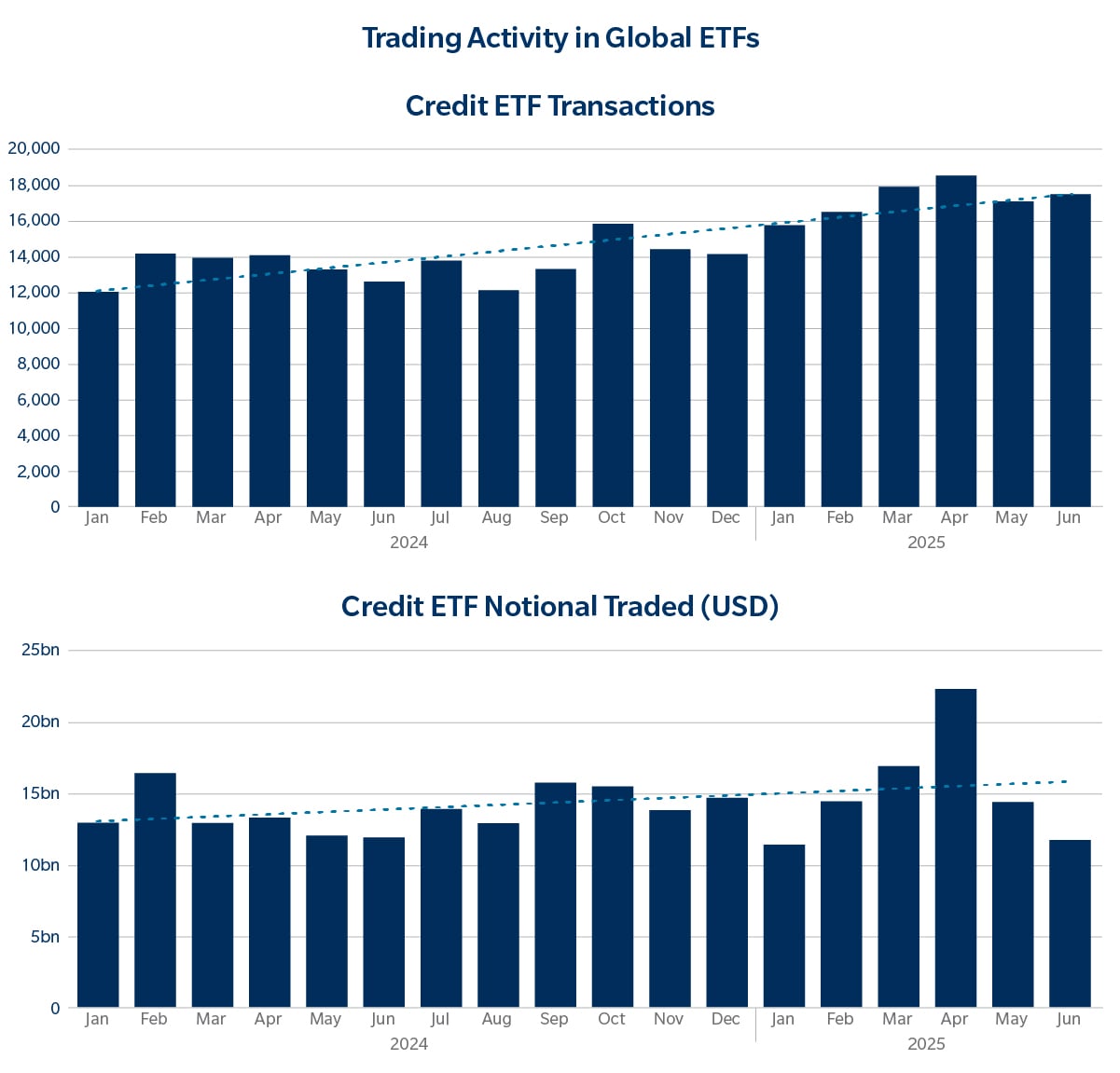
Credit Exchange-Traded Funds (ETFs) emerged as another key instrument that market participants used to navigate turbulent conditions, offering greater speed, transparency, and macro-level exposure. While ETFs are predominantly equity-based, trading activity in fixed income-based funds continues to grow.
In H1 25, total notional Credit ETF volumes on our U.S. and European institutional ETF platform topped $44 billion and $47 billion, respectively, marking a 17% and 12% YoY increase, combining to reach a record $91 billion in notional volume. This growth highlights how investors are increasingly turning to credit ETFs to express short-term, tactical macro views and implementing portfolio exposure shifts with immediacy.
When Data Leads the Trade
Beyond execution mechanics, the data also tells a broader story about market mindset. The first half of this year reflected a blend of conviction and optionality, as clients increasingly knew when to move and how to do it precisely.
The Power of Optionality
The crux of the story is that it’s good to have options. There was no single silver-bullet strategy that set the tone for the rest of the market to follow, and the best path to maintaining liquidity and keeping markets moving was to stay nimble. Whether it was using different trading protocols, different currencies or different asset classes, market participants found a path to stability in a marketplace that, at times, felt anything but stable.
For the remainder of 2025, the outlook remains complex. Markets will inevitably be tested: the tariff threat looms, and geopolitical tensions persist. However, one thing is clear: flexibility, optionality and transparency, powered by innovation and data, remain the cornerstones of credit trading. At Tradeweb, we continue to innovate and evolve our credit offering to help clients navigate whatever lies ahead.
Related Content
Credit Markets Put to the Test in Tariff Tumult