Asia's Electronic Trading Revolution: Where Market Dynamics Meet Digital Innovation

Rich Chun
Head of Asia Pacific, Tradeweb
The Asia opportunity
Asia’s fixed income markets are at a real turning point – one where electronic trading, automation and artificial intelligence are no longer emerging trends, but central to how liquidity is accessed and risk is managed. Across the region, we see this shift clearly in our conversations with clients. Traders across the region operate in fast-moving, complex and often volatile conditions.
Having spent much of my career working across Asia’s markets, what stands out today is the pace of change. Electronic trading is no longer a gradual evolution – it is being embedded rapidly across products, workflows and trading strategies.
Structural forces reshaping Asia’s trading landscape
When Tradeweb first expanded into Asia, electronic trading was still relatively limited, both in terms of instruments and liquidity. There was also an understandable scepticism about whether electronic execution could really work in markets built on relationships. Today, that picture looks very different.
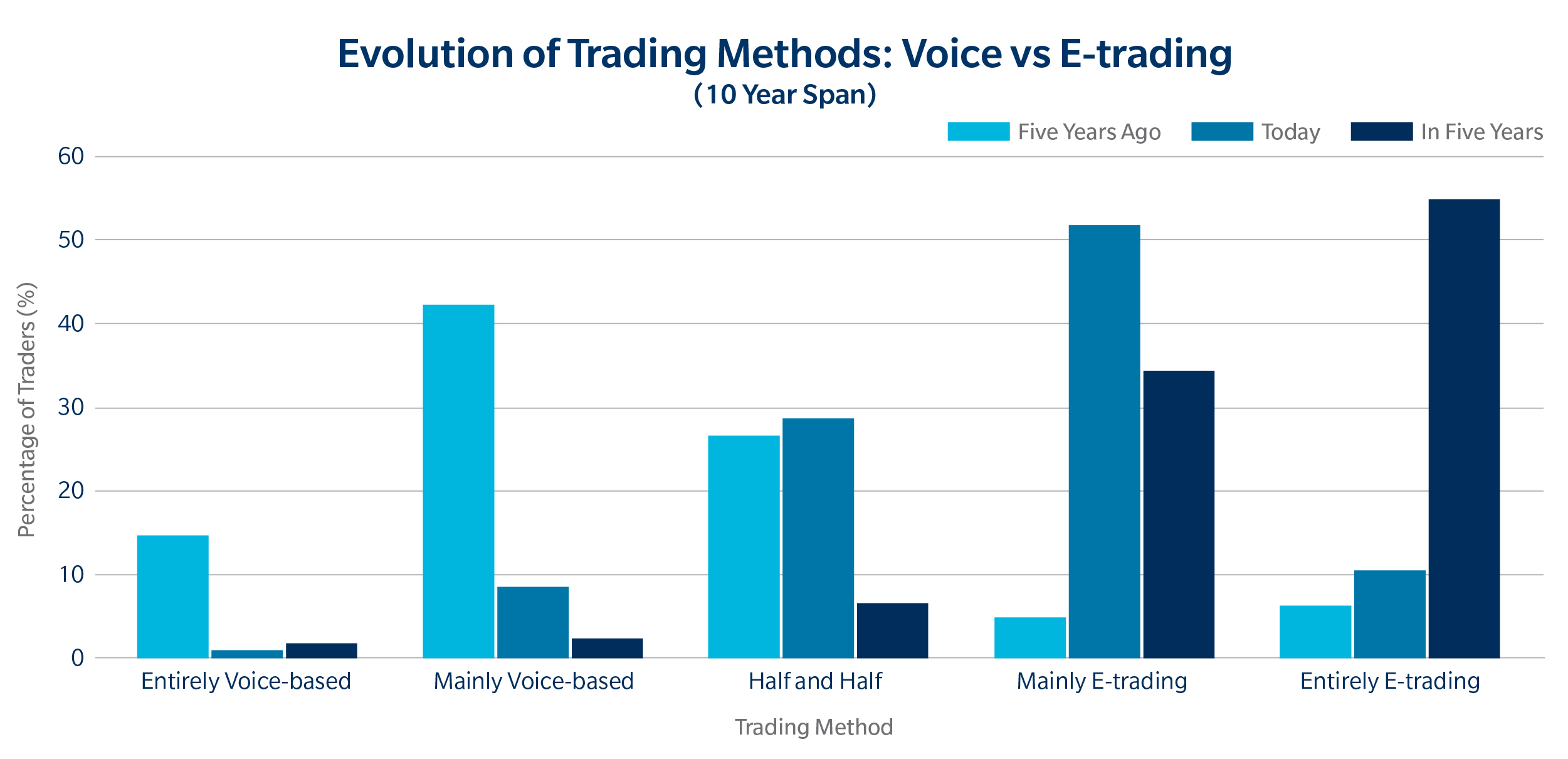
The direction of Asia’s fixed income markets reflects broader shifts across the region, as economic conditions, policy developments and technology converge to accelerate the adoption of electronic trading. According to a recent report by Financial Times Longitude, more than 70% of Asia-based traders execute the majority of their trades electronically – up from just 9% five years ago. Volatility has become a defining feature of the market, driven by geopolitical uncertainty, shifting monetary policy and deeper integration with global capital flows. In this environment, speed and clarity matter more than ever. Traders need access to timely data, reliable liquidity and efficient execution, and electronic trading platforms are critical in delivering that – providing transparency and enabling faster, more informed decisions.
Regulation is also evolving at pace. Across the region, regulators are working to balance innovation with investor protection, while also supporting the development of more transparent and efficient market structures. We are seeing meaningful progress is being made on multiple fronts – from Japan’s efforts to modernise derivatives reporting, to Singapore’s initiatives supporting digital asset tokenisation, and China’s ongoing measures to expand foreign access to onshore bond markets. In Hong Kong, the HKMA/SFC roadmap for fixed income and currency markets further underscores the focus on digitalisation, next-generation infrastructure and deeper offshore RMB liquidity.
At the same time, the investment landscape is shifting, with investors diversifying across currencies and asset classes as they respond to geopolitical uncertainty and structural change. Against this backdrop, the continued growth of electronic trading – across both client and interdealer activity – is improving price discovery, expanding liquidity access and helping to create a more connected, transparent and efficient market ecosystem.
The direction of travel is clear, as electronic venues support a broad range of products, liquidity has deepened, and price discovery has improved, with tighter spreads across asset classes. By handling routine execution efficiently, electronic platforms also free up time for traders to focus on higher-value client conversations and more strategic thinking. At the same time, modern e-trading platforms help firms navigate evolving requirements by providing robust compliance tools, audit trails and reporting, without adding unnecessary operational burden.
Recent data highlights some interesting points
These changes are not theoretical – they are reflected in how traders operate day to day. I was particularly interested in some recent research. Conducted independently by Financial Times Longitude, the survey gathered responses from more than 350 participants globally, all working within the financial e-trading ecosystem. Of these, 120 respondents were based in Asia, spanning major financial centres including Hong Kong, Singapore, Tokyo and other key regional hubs. The sample represents a broad cross-section of buy-side and sell-side fixed income trading professionals.
Source: FT Longitude Survey, November 2025
More than half of Asia-based respondents surveyed say they often change strategy at the last minute because of market volatility or breaking news. At the same time, over a third say trading is more stressful than ever, highlighting the pressures they face.
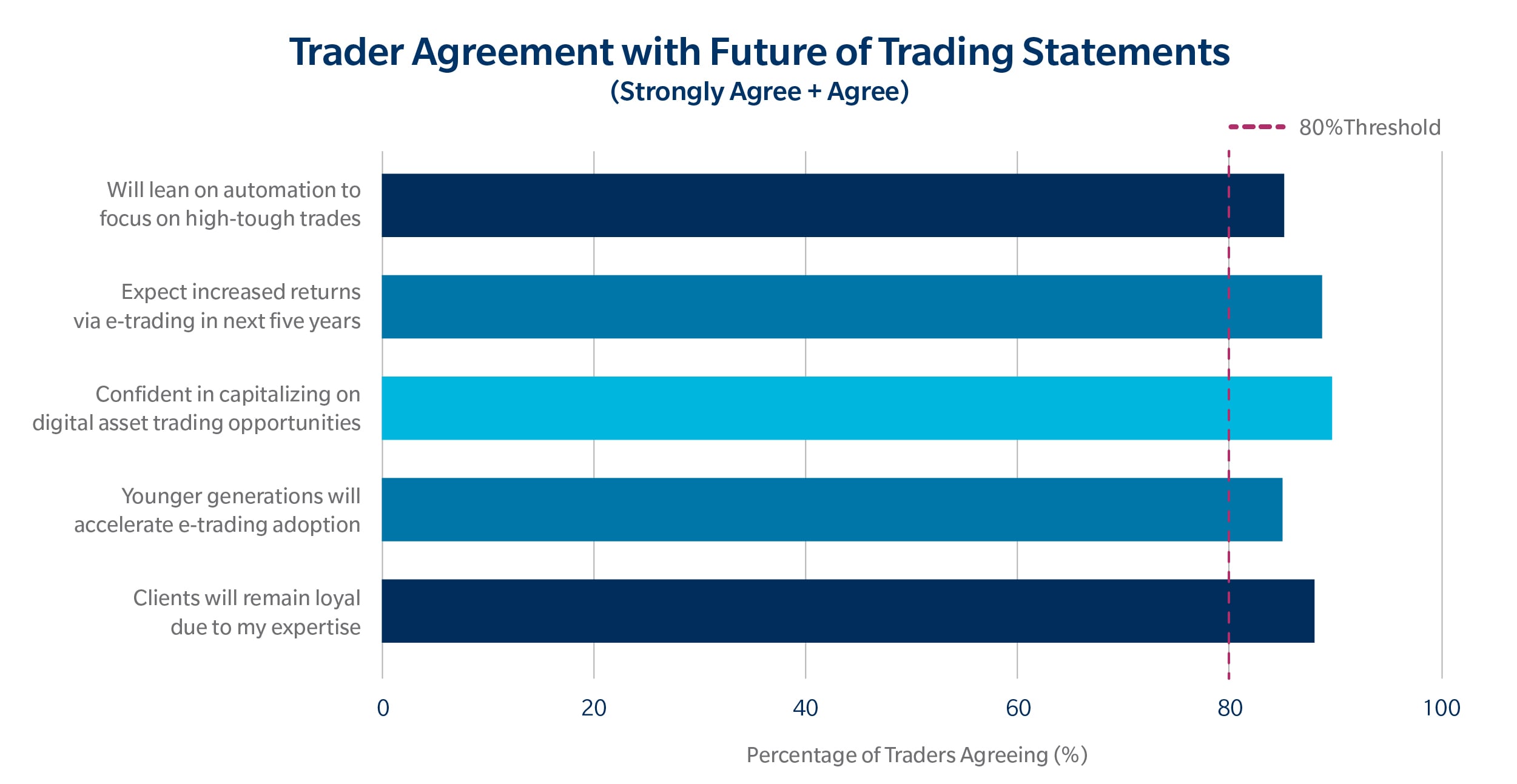
Over three-quarters of respondents say e-trading helps them make more confident decisions in volatile markets, particularly as volumes increase and liquidity becomes more fragmented across products and time zones. This is not about replacing human judgement – it is about supporting it with better data, broader market visibility and faster execution.
It seems e-trading adoption levels in the respondents underline this point. Today, more than 71% (85 of 120 respondents) execute the majority of their trades electronically, compared with just 9% who reported doing so five years ago.
Furthermore, AI is already delivering tangible benefits, while a significant number of traders say it saves them significant time with many are actively exploring automation tools to sharpen their edge. Importantly, concerns about technology replacing traders are limited. Most consider these tools as complementary, allowing them to focus on judgement, relationships and strategy.
Looking ahead, traders consistently point to three dominant themes shaping the landscape: heightened volatility, the continued growth of multi-asset trading, and the rise of digital assets. Importantly, they view technology not as an added complication, but as a critical enabler; a tool to help navigate complexity, unlock efficiency and seize new opportunities.
Source: FT Longitude Survey, November 2025
The path forward
Asia’s fixed income markets are becoming more digital, more data-driven and more interconnected, with the pace of change continuing to accelerate. Traders increasingly demand tools that can keep pace with evolving market complexity, and electronic trading meets that need. Just as importantly, the mindset has changed: technology is no longer seen as a threat to traditional trading, but as a foundation for stronger and more efficient markets.
At Tradeweb, our focus is on building technology that supports where the market is going, not just where it is today. This means continuing to invest in platform technology that reflect Asia’s diversity of products, protocols and market structures, while closely collaborating with our clients to ensure innovation delivers real value.
As electronic trading deepens and technology becomes further embedded in how liquidity is accessed and risk is managed, the firms best positioned for what comes next will be those that can combine market expertise with the intelligent use of data and execution tools. What is clear is that this is not a gradual shift, but a structural transformation already well underway – one that is reshaping how markets function and how traders operate across the region.
About the survey:
This article draws on responses from 120 fixed income trading professionals across Asia and forms part of a larger global study conducted by the Financial Times Longitude, which gathered insights from 357 respondents worldwide.
The research was conducted in November 2025 by Financial Times Longitude, the specialist research arm of the Financial Times, and was commissioned by Tradeweb. While Tradeweb commissioned the study, the survey was designed, fielded, and analysed independently by Financial Times Longitude to ensure objective and unbiased insights. All data collection and analysis were carried out by the FT research team.
The survey covers major Asian financial centres, including Hong Kong, Singapore, Tokyo, and other key regional hubs, and represents perspectives from both buy-side and sell-side fixed income trading professionals.